A branded podcast is a show your company owns and publishes for people outside it, about a topic you know better than your competitors do. It sells nothing directly. It earns the subscription by being useful.
Most branded shows die at episode four, because each one needs recording, editing, and sign-off. In Jellypod you drop in a report, a webinar, or a customer story, edit the script line by line, and publish through your own RSS feed to Spotify, Apple Podcasts, and YouTube. Your brand colors, logos, and a cloned host voice carry over from episode to episode.
Key takeaways
- Build the show around a narrow audience and a topic your product solves, not around your product.
- Consistency is what makes a branded show read as a brand: one host voice, one cover style, one website, one feed.
- On Jellypod, hosting, an RSS feed, a podcast website, and distribution to Spotify, Apple Podcasts, and YouTube come with every paid plan. Custom domains start on Business.
- 3 Rivers Energy Partners ships a weekly show this way, and Kaishan USA turns episode transcripts into blog content that ranks.
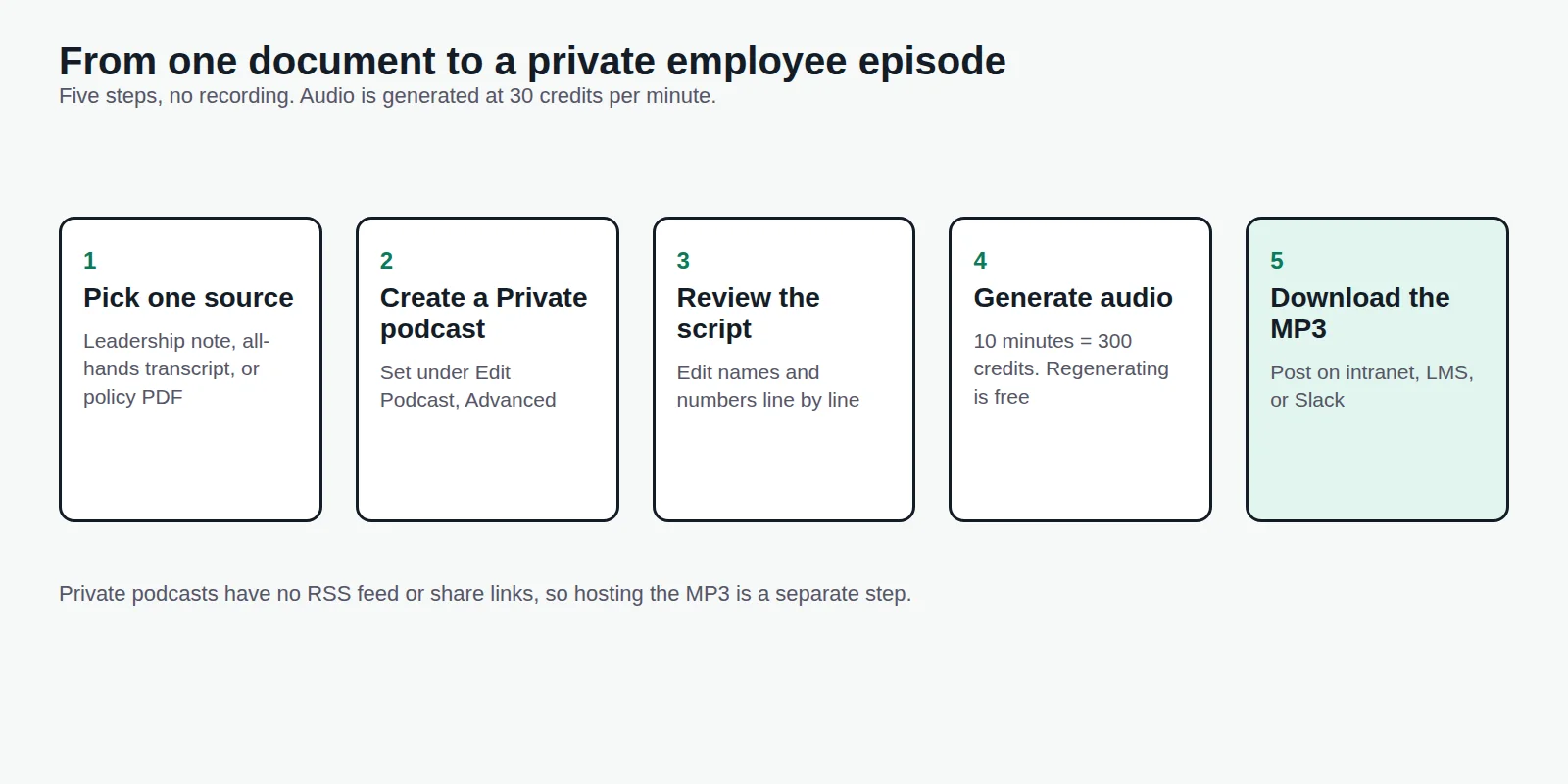
- A public show and an employee show are different products. Keep them in separate feeds.
What makes a podcast a branded podcast?
Three things: your company owns the show, the audience is external (customers, prospects, partners), and the topic is the problem your product solves rather than the product. A marketing technology company gets a better show from covering go-to-market strategy than from covering its own software.
The external audience is the line that matters. An internal communications podcast runs on a private feed for employees and can be as plain as you like. A branded show sits in public directories next to professional shows, so the name, cover, and consistency have to hold up.
What kinds of branded podcast work?
Industry briefing
Customer story episodes
Research walkthrough
Practitioner explainers
Pick one format before you pick a topic. A briefing needs fresh sources every week, and a research series needs one solid report. Choose the one your team can feed on schedule.
How do you keep a branded podcast on brand?
Consistency across many episodes, and across several shows, is where branded podcasts usually slip. Four settings in Jellypod cover it.
- Brand kits. A brand kit stores five color roles (Primary, Secondary, Accent, Background, Text) and separate logos for light and dark backgrounds. Assign one to a podcast and its website takes those colors, updating when you edit the kit. Shorts and videos start from your default kit. Starter includes one kit, Creator and above have no limit, and the free plan has none.
- Cloned host. A voice clone needs at least 30 seconds of audio (60 is recommended), and you must have the rights to the voice. The voice cloning page covers how to clone a guest through a single-use invite link. Starter includes 2 clones, Creator 8, Business 20.
- Your own domain. Every show gets a hosted podcast website. Custom website domains are a Business plan feature.
- Cover art. The cover is what listeners see first in Spotify and Apple. Follow the sizing and legibility rules in our podcast cover art guide.
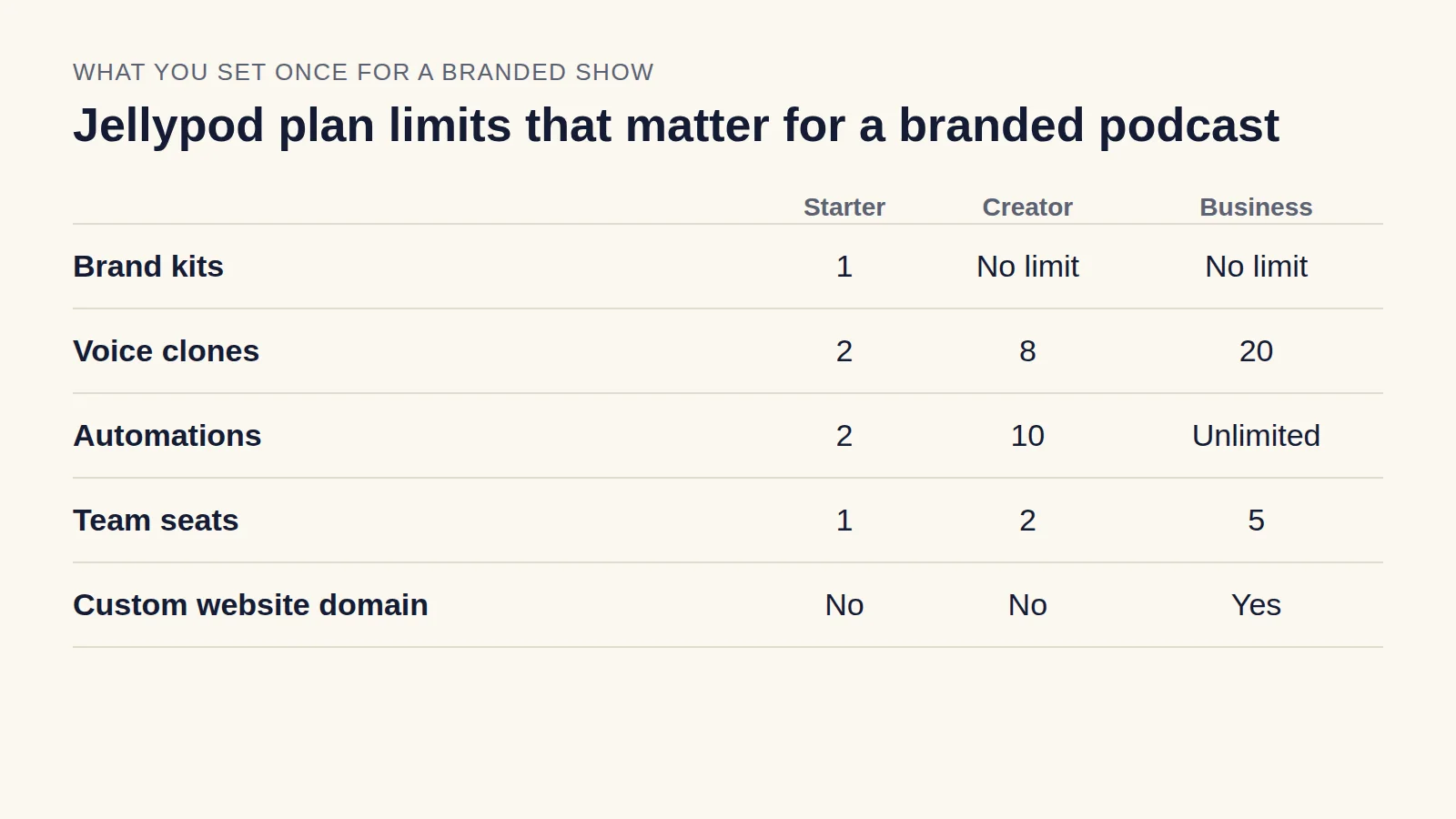
Teams that run several shows (a flagship briefing and a customer series, say) share hosts, voice clones, and episodes across one organization, with credits pooled. Creator includes 2 seats, Business 5, and Enterprise adds SSO and custom contracts on the enterprise plan.
How do you launch a branded podcast step by step?
- Name the audience and the problemWrite one sentence: "For [role] who need to [outcome]." Then title the show for that audience and topic, since the title is what Spotify and Apple search on. "CFO Briefing: Treasury and Risk" competes with almost nothing. "The Business Innovation Show" competes with everything.
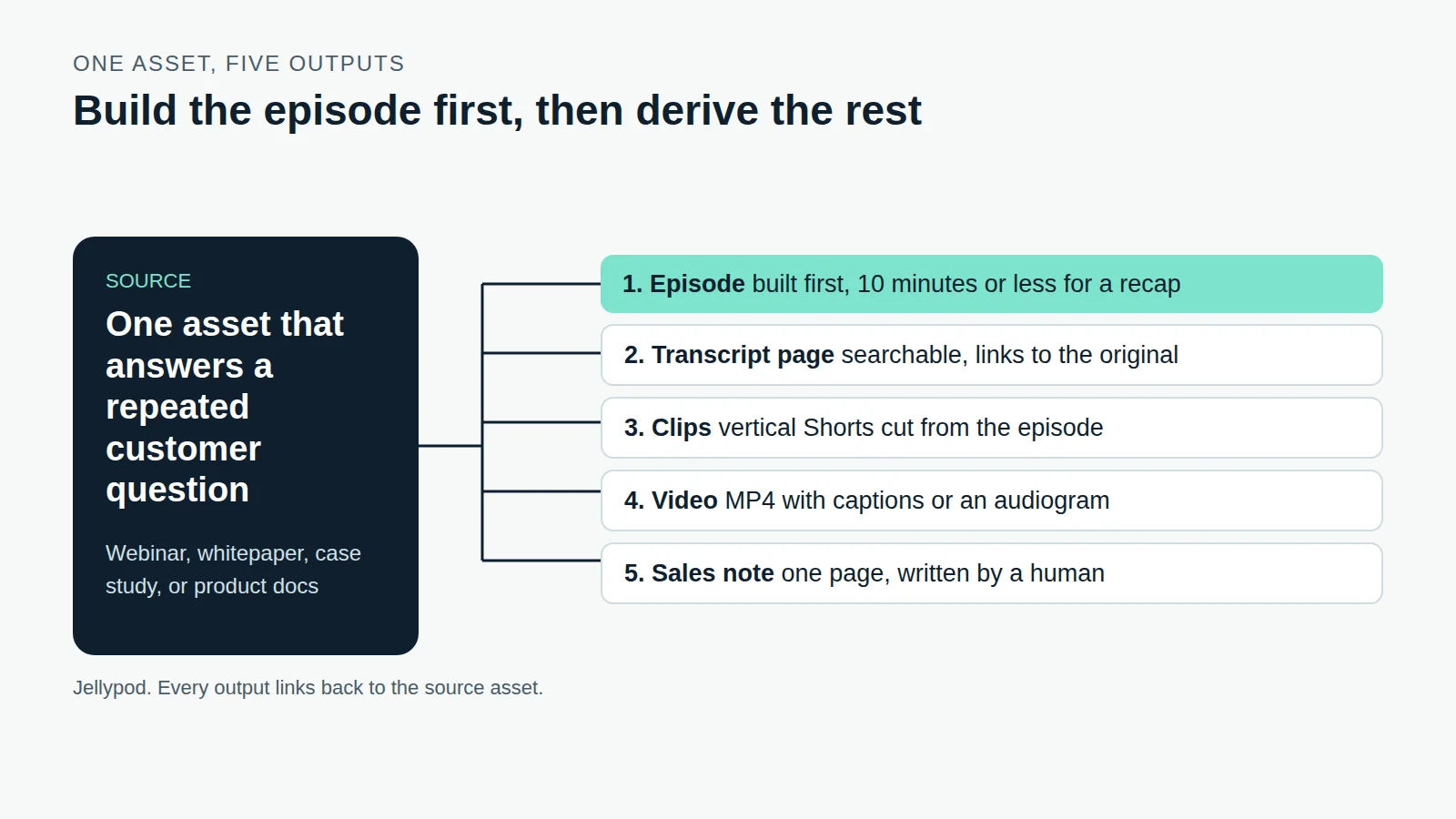
- Collect six episodes of source material firstReports, webinar recordings, customer case studies, and your best blog posts all work. The B2B content repurposing playbook shows how to rank your sources and choose the format for each.
- Set the brand onceCreate the brand kit, clone the host voice, and finish the cover art before episode one, so every episode inherits them.
- Generate, edit, then publishJellypod drafts a multi-host script from your sources. You edit the script line by line, then generate the audio. Regenerating audio after a script fix is free.
- Submit the feed onceSubmit the show's RSS feed to Spotify, Apple Podcasts, and YouTube. Later episodes sync on their own. Spotify's own AI podcast tool is a different thing, covered in what Spotify Studio does and does not do.
- Publish the transcriptPut each transcript on your site next to the episode. It gives search engines text to index and gives readers an alternative to listening.
Does a branded podcast work for a real company?
Two Jellypod customers show the two ways it pays off, both told in their own words.
3 Rivers Energy Partners, a renewable natural gas company, needed to educate customers and partners, and found long posts went unread and video was too heavy to keep up. Their SVP of Marketing, Kegan Rivers, created two hosts, and the team now publishes "Digest This" every Tuesday. Each week they drop in press releases and policy updates, generate an outline, edit the script with their own view, and publish. Read the full 3 Rivers Energy customer story.
Kaishan USA, an air compressor maker, works with its agency RIVET to generate podcasts on industry topics, then transcribes them into blog posts on its own site. Lance Baird of RIVET says the approach helped them reach the top 10 for major keywords, tracked in Google Search Console. See the Kaishan USA case study.
Both are small teams with a weekly rhythm, which is the point: the format works when publishing stays cheap enough to continue.
How often and how long should a branded podcast run?
Weekly builds a listening habit, and biweekly is fine for a smaller pipeline. Missing dates hurts more than a slower cadence, so choose the one you can hold for six months. Briefings suit 5 to 10 minutes, customer stories 10 to 20, and research walkthroughs can run longer. Episodes can be up to 60 minutes on paid plans, but shorter is safer while you learn what your audience finishes.
To hold a weekly schedule without manual steps, podcast automations generate episodes from live sources. Starter includes 2 automations, Creator 10, and Business unlimited.
Can a mission-driven organization run a branded show?
Yes. Churches, nonprofits, and associations run the same playbook with different sources: sermons, member education, and advocacy stories. The church podcast guide walks through it for faith organizations.