

Overview
Looking for a Riverside alternative? Riverside records conversations, while Jellypod generates full episodes from a source. Riverside built its reputation on one thing: studio-quality remote recording. Their local recording technology captures 4K video and uncompressed audio on each participant's device, so a bad internet connection doesn't ruin your interview. Add text-based editing, AI-powered clips, an AI Co-Creator editing agent, translation and dubbing in 30+ languages, and podcast hosting, and Riverside has become a full-stack tool for interview-based podcasters and video creators. In 2026 it also added AI Voice on the Pro plan, which clones your own voice so you can turn a short typed script into audio for intros and ad reads.
The key difference is starting point. Riverside assumes you're recording real conversations with real people, and even its AI Voice inserts start from a clone of your own voice for short segments on a recording timeline. Jellypod assumes you have content, a topic, article, or document, and want to turn it into a full multi-host episode with AI voices. One requires a microphone or your own voice; the other requires an idea and a URL.
For a comparison with another editing-focused tool, see our Jellypod vs Descript comparison.
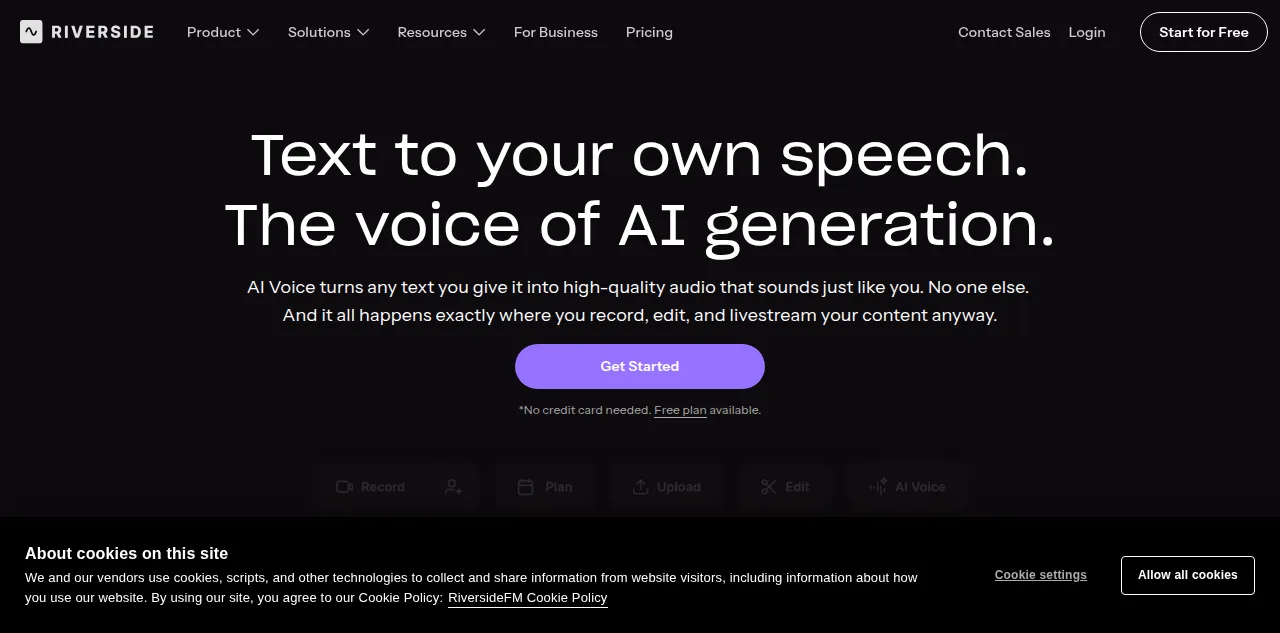
Riverside added AI Voice in 2026, but it clones your own voice for short inserts on a recording timeline, not full AI-hosted episodes from a source.
Our Verdict: Is Jellypod a Good Riverside Alternative?
Riverside and Jellypod serve podcasters on opposite sides of the same industry. Riverside is the tool you want when you're sitting down with a guest for a remote interview and need pristine 4K video and lossless audio. Their local recording technology genuinely solves the biggest problem in remote podcasting: internet-dependent quality loss.
Jellypod is the tool you want when you have content to share but no guests to interview. Give it a source and it produces a complete episode, then hosts, distributes, and measures the show. No scheduling calls, no equipment, no post-production.
Many podcasters will find value in both tools at different times. Use Riverside for your interview episodes and Jellypod for your research-based or news-style content. They don't compete as much as they complement each other.