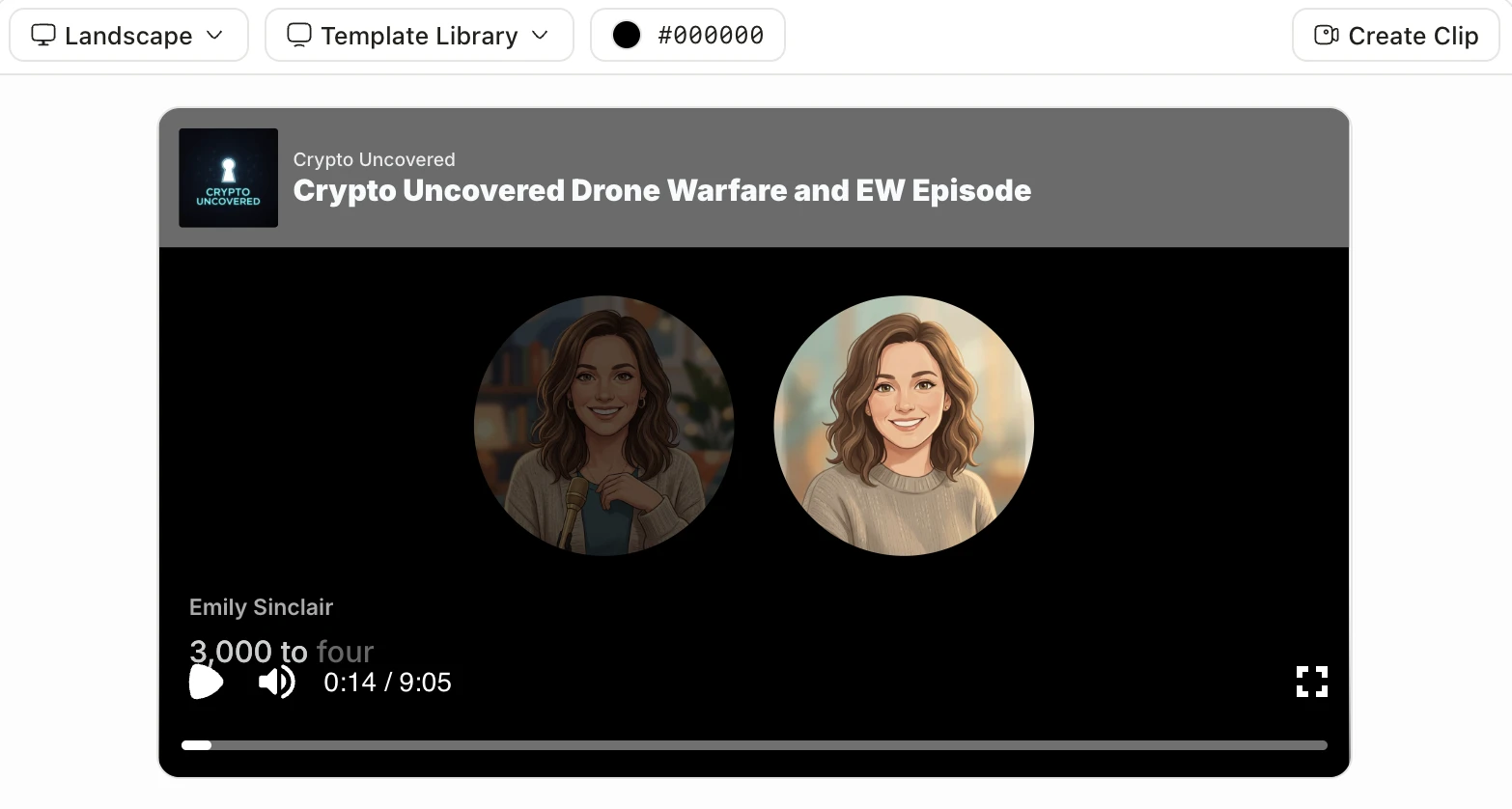
Most instructors I talk to have the same quiet frustration: they spent hours preparing a lecture, recorded it for asynchronous students, posted the slides as a PDF, and almost no one made it all the way through. The reading gets skimmed. The video gets scrubbed. The slide deck gets opened five minutes before the exam.
It is a format problem. Students live with earbuds in. They listen on the bus, while walking across campus, while cooking dinner. According to Edison Research's 2024 Infinite Dial report, 47% of Americans aged 12 and over had listened to a podcast in the last month, and weekly podcast listening among 12 to 34 year olds reached a record high. That is the surface area you are competing with when you ask a student to sit down and read a 40-page PDF.
Repurposing your existing teaching material into short podcast episodes meets students where they already are.
The basic flow
You do not need new content. You already have it. Once you have the workflow down, the whole loop takes less time per episode than re-recording a single lecture.
- Gather what you already teachSlide decks, lecture transcripts, supplementary PDFs, and the research articles you assign as background reading.
- Drop those sources into JellypodAdd them as the context for an episode.
- Generate a short, conversational episodeUse one or two hosts: your cloned voice if you want students to hear you, a co-host for the back-and-forth that keeps listeners engaged.
- Edit the scriptEdit it the way you would a teaching assistant's draft. Tighten the cadence, fix anything that misreads your view, add the example you always tell in class.
- Publish where it belongsA private RSS feed for course-specific material, a public podcast site for evergreen topics.
Three concrete use cases
Pre-class prep
Exam review
Async office hours
A real example
Steve DeNunzio teaches logistics in the Fisher College of Business MBA program at The Ohio State University. He publishes a 7 to 9 minute episode every Tuesday morning that covers a current logistics topic, generated from a handful of credible source articles. Students consume it before class, so the 70-minute session can focus on debate and applied work instead of basic delivery.
It's not about replacing lectures. It's about reinforcing the arc of learning in the moments students actually have.
— Steve DeNunzio, Professor of Logistics, The Ohio State University
The detail I keep coming back to: in a 70-minute MBA class, he needs nine or ten deliberate pivots, lecture to video to simulation to discussion, just to hold attention. A 7-minute audio episode is one of those pivots, but it happens before class and offloads the transmit-the-information part entirely. The classroom gets the high-value 70 minutes back.
You can read the full story here: How an Ohio State MBA professor uses AI podcasts.
Why audio works for learning material
A few things stack in your favor when you move teaching content from text or video into audio.
Multitasking compatibility
Conversational framing
Voice carries authority
Lower production cost
What to watch out for
- Don't replace the lecture; supplement it. Episodes work best as the pre-class brief or the post-class consolidation, not as a substitute for the live discussion where the real learning happens.
- Cite your sources. When you feed in research articles or third-party material, keep attribution clear in the script. Students notice, and so do colleagues.
- Pick a sustainable cadence. Weekly is great if you can hold it. Bi-weekly beats weekly-for-three-weeks-then-nothing.
Where to go next
If you want to see how other educators use Jellypod, what cadence, what episode length, what source material works best, start here: Education use case. If the source is a full textbook rather than your own slides, see how to turn a textbook into a podcast chapter by chapter. If your source is looser than a lecture, more like scattered notes or a bullet-point outline, see how to turn your notes into a podcast.
The short version: you already have the content. The only thing missing is a format your students will actually finish.