
A nonprofit podcast is an audio show built from material a communications team already produces: program updates, donor letters, grant reports, event recordings. It needs a source, a voice, and a feed. It does not need a hire.
Jellypod turns whatever a nonprofit already has, a grant report, a recorded info session, the notes from last week's board meeting, into a produced episode with hosts, a transcript, and a public feed. Across more than 40,000 organizations on the platform, over 85% of the material used to build an episode is an existing file rather than something written from scratch. Most nonprofits are further along than they realize. The part that actually stalls a launch is production, and that's exactly the budget line most communications teams don't have.
Podcast listening keeps climbing regardless of sector. 58% of Americans age 12 and up, about 167 million people, listened to a podcast in the last month, an all-time high according to Edison Research's Infinite Dial 2026 report. Meanwhile the channel most nonprofits lean on hardest is getting harder to work with: nonprofit email lists lost 12% of subscribers to unsubscribes and another 4% to bounces in a single year, per Nonprofit Tech for Good's 2026 email benchmarks. A podcast doesn't replace email or social. It's a channel that's growing while an old one shrinks, and it works during a commute instead of competing for a screen.
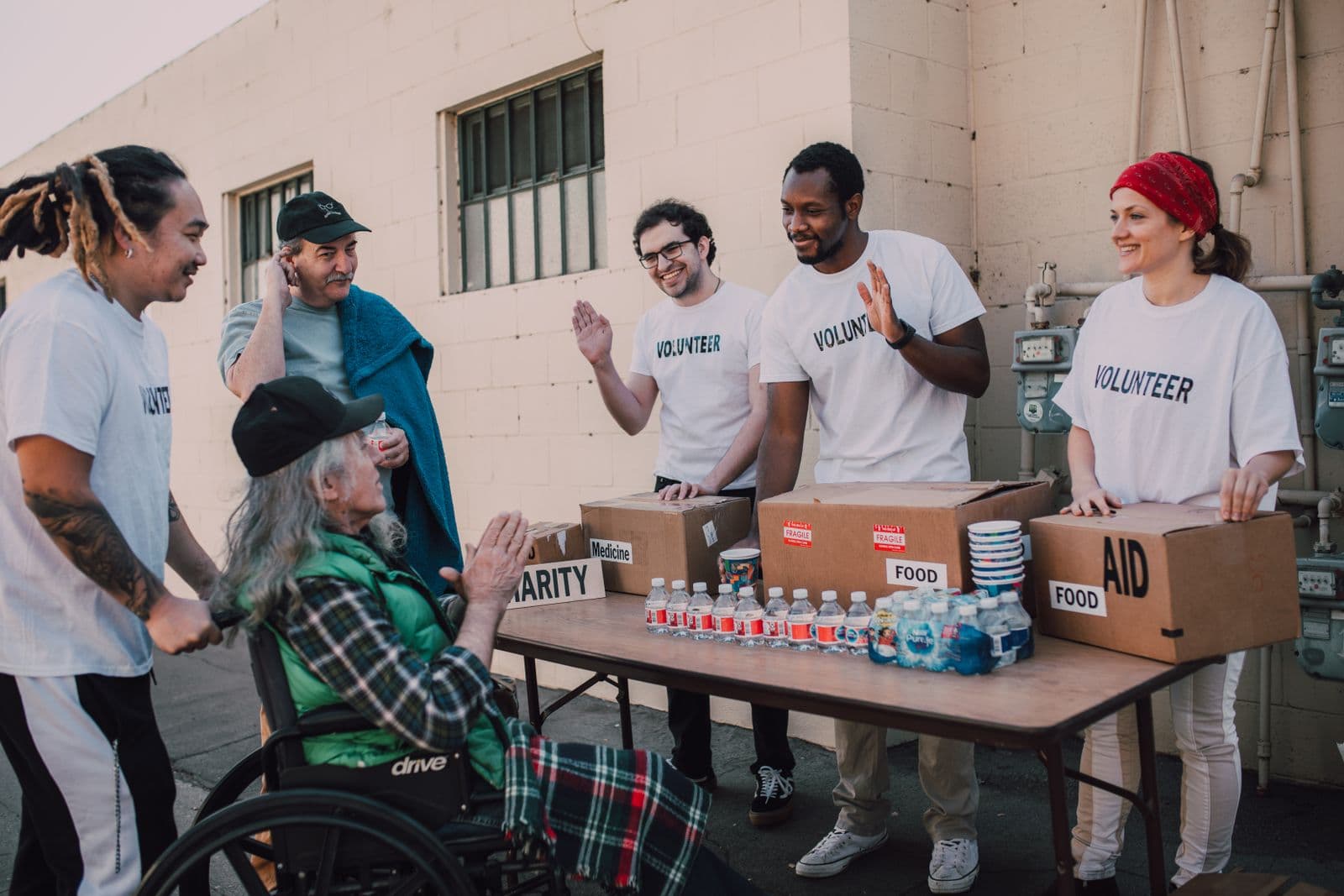
What do you actually need to start a nonprofit podcast?
Strip away the equipment lists most guides lead with, and it comes down to three things.
- A source. Most nonprofits already have one: an annual report, a program update, a recorded webinar, a grant summary, the notes from a board meeting.
- A voice. The executive director's own voice, a program lead as co-host, or a cloned version of a founder's voice for episodes that were never recorded live.
- A feed. One RSS feed that Spotify, Apple Podcasts, and the nonprofit's own website can all point to.
The step most teams stall on isn't finding content. It's turning a report or a recording into something that sounds like a show instead of a meeting.
What should a nonprofit podcast actually be about?
Pick from what the organization is already doing, not a topic invented for the show. Program updates work when a listener can hear the outcome of their donation in a specific story, not a summary paragraph. Staff and volunteer spotlights work because they put a real voice behind a mission that otherwise reads as a logo and a tagline. Policy or advocacy explainers work when they answer the one question supporters keep emailing about. Event recaps work best short, five minutes on what happened and why it mattered, not a full replay of a two-hour gala.
A show does not need all four. Most nonprofits do better picking one lane and running it consistently than mixing formats every episode.
How do you turn what you already have into episodes?
- Pull the sourceUpload the annual report, the grant summary, the webinar recording, or the board meeting notes. Any format works: a PDF, a video file, a URL, or plain text.
- Generate a scriptJellypod turns the source into a clean, editable script, trimming the parts written for funders and expanding the parts a listener will actually care about.
- Choose the voiceUse a real recording as-is, or generate the episode in a cloned voice for material, like an annual report, that was never spoken aloud in the first place.
- Review before it publishesProgram names, statistics, and any donor or client details deserve a human read-through, the same scrutiny a grant report gets before it goes out.
- Publish to one feedA single RSS feed lists on Spotify, Apple Podcasts, and the nonprofit's own site, so supporters subscribe once and never miss an update.
This is the same shift B2B teams have already made with webinars and whitepapers, covered in the content repurposing playbook: the content already exists, and the only real work left is choosing which parts of it deserve a wider audience.
How much does it cost to start a nonprofit podcast?
A traditional setup runs $150 to $300 for a microphone and basic recording gear, plus $20 to $50 a month for editing and hosting software, before anyone spends a single hour producing an episode. For a communications budget that's usually stretched across a website, an email platform, and print materials for an annual gala, that's a hard line item to justify for an unproven channel.
Jellypod is free to start, with credits spent only when an episode publishes or downloads, sized to the finished episode length. A quarterly impact update costs a fraction of what a single donor mailer costs to print and post, and it doesn't require a design vendor or a print deadline to ship.
A real example: a four-person team giving microbusinesses a voice
The Covation Center, a Williamsport, Pennsylvania nonprofit that coaches microbusinesses and artisan entrepreneurs, ran into the production wall directly. Executive Director Steve Bradshaw's team had spent eight years building training videos and YouTube content with four people. They wanted their actual voices at the center of new episodes, not a generic narrator, which ruled out anything that sounded canned.
Steve tried NotebookLM and uploaded a custom voice to ElevenLabs first, but neither let his team have a real, back-and-forth conversation in their own voices. Jellypod did: they import voice clones, feed in existing curriculum content as source material, and co-host episodes as themselves. "The fact that we have automation, intelligence, and control. That's what I really like," Bradshaw said.
"We can't store time," he added. "Jellypod gives it back to us." That time goes back into coaching and the relationships a four-person nonprofit team can't outsource.
Frequently asked questions
Do we need a professional host or on-air talent?
No. The strongest nonprofit podcasts use the people already closest to the mission, an executive director, a program manager, a longtime volunteer, not a hired narrator. Listeners forgive an imperfect vocal delivery far more readily than they forgive a show that doesn't sound like it belongs to the organization.
Can volunteers or board members co-host?
Yes, and it often works better than a single host carrying every episode. A rotating cast of program staff and volunteers keeps the show from depending on one person's schedule, and it gives more of the organization a reason to promote each episode once it publishes.
How often should a nonprofit publish episodes?
Monthly or quarterly is realistic for a small communications team, and it beats a weekly schedule that collapses by episode four. Tie the cadence to something the organization already produces on a schedule, a quarterly impact report or a monthly program update, so the podcast rides along instead of becoming a new deadline.
Can we produce episodes in multiple languages for different donor or client communities?
Yes. The same source material can generate a separate episode in another language, translated for tone rather than run through a flat machine translation, which matters when a program serves a community that doesn't speak English as a first language. Keep a fluent speaker in the review step for each language version.
Do we need board approval before publishing our first episode?
Treat it like any other public communication: whoever signs off on the annual report or a press release should see the first script before it goes out. After the first few episodes prove the format, most boards fold podcast review into the same approval process as other public materials instead of reviewing each one individually.
Where Jellypod fits
Jellypod turns a report, a recording, or a set of meeting notes into a produced podcast episode with a transcript, an RSS feed, and listings on Spotify and Apple Podcasts. Voice cloning keeps a founder's or director's real voice at the center of the show without a recording session for every episode, and Jellypod is free to start, with cost tied to what actually publishes rather than a flat monthly fee. For a four-person communications team, that's the difference between a podcast staying a good idea in a planning doc and one that actually ships.
The short version
The content already exists in last quarter's report, last month's webinar, or last week's board update. The only thing missing is the format donors and volunteers will actually finish. Pick a source, choose a voice, publish to one feed, and start with the general guide to starting a podcast for the parts that apply to any show, nonprofit or otherwise.