A micro drama is a scripted drama series told in vertical episodes of one to two minutes, made to be watched on a phone. Each episode opens on a hook and ends on a cliffhanger, and a series runs to dozens of episodes. People watch them on TikTok, Reels, and YouTube Shorts, and binge them in apps like ReelShort and DramaBox.
The format started in China, where it is called duanju ("short drama"). In 2024 China's micro drama market reached 50.44 billion yuan, more than the country's 42.5 billion yuan box office that year.
A live-action micro drama is typically shot in eight to 10 days with a cast and crew. Jellypod's AI micro drama maker makes illustrated ones instead. You write the scene, up to four saved characters voice it, and Jellypod draws every shot in one visual style with captions and a score.
Key takeaways
- A micro drama is a serialized story in vertical 9:16 episodes of about one to two minutes, each ending on a cliffhanger.
- Vertical drama, short drama, mini drama, and duanju all describe the same format.
- The dedicated apps give away the first episodes, then charge coins or a subscription to unlock the rest.
- A live-action series is cheap by TV standards but still needs a crew. AI production swaps the shoot for a script, a cast of saved characters, and generated shots.
What is a micro drama?
A micro drama is a scripted serial built for a phone screen. Where a TV episode runs 30 to 60 minutes, a micro drama episode is one short scene. Stack dozens of them and you have a full story. TheWrap describes a typical series as a 60 to 100 minute story "divided into about 90-second episodes, each one ending with a juicy cliffhanger."
The format goes by several names, and they mean the same thing:
| Term | Where you hear it |
|---|---|
| Micro drama, microdrama | Trade press, US studios |
| Vertical drama, vertical series | Producers, screenwriters, casting calls |
| Short drama, mini drama | App stores and app listings |
| Duanju (短剧) | China, where the format began |
What separates a micro drama from other short video is that it is scripted fiction told as a serial. A one-off comedy skit or a vlog is short and vertical but has no ongoing plot for you to follow.
Where did micro dramas come from?
Micro dramas come from China's duanju. According to Wikipedia's history of the format, they appeared around 2018 on Douyin and Kuaishou, borrowing plots and tropes from Chinese web fiction, and spread to WeChat's video platform.
By 2024 the domestic market was worth 50.44 billion yuan (about $6.9 billion), up 34.9 percent year on year, according to a Tencent News report covered by China Culture. That was larger than China's 2024 box office of 42.5 billion yuan, as reported by the China Film Administration.
The format then went abroad through apps built for English-speaking viewers. ReelShort launched in August 2022 from Crazy Maple Studio, which is backed by Beijing publisher COL Group. DramaBox followed in April 2023 from Dianzhong Technology. ReelShort now has a US content team writing original English-language series.
How long is a micro drama episode?
Most micro drama episodes run one to two minutes. ReelShort's App Store listing describes its episodes as about 1 to 2 minutes, and TheWrap puts a full series at 60 to 100 minutes in total.
The other conventions are just as consistent:
- Vertical 9:16 framing. Micro dramas are shot for a phone held upright, so close-ups and two-shots do most of the work.
- A hook in the first seconds. Episodes open mid-conflict or on the previous episode's twist, because viewers arrive by swiping.
- A cliffhanger at the end of every episode. Each episode is one scene with one turn, and it cuts on a question.
- Big, familiar genres. Romance, revenge, hidden identities, and fantasy dominate. Billionaire and CEO romances are a staple. TheWrap reports that ReelShort's catalog is mostly romance but now includes thrillers too.

Where can you watch micro dramas, and how do the apps make money?
You can watch micro dramas in dedicated apps such as ReelShort and DramaBox, and as clips on TikTok, Instagram Reels, and YouTube Shorts. Some series post their opening episodes on social platforms as trailers and send viewers to an app to finish the story.
Most apps use the same model. TheWrap reports that "users get the first eight to 10 episodes for free, but must pay to unlock the rest," through coins, subscriptions, or ad-supported tiers. ReelShort explains that locked episodes can be unlocked with coins or bonuses, or by watching ads, and that a subscription gives unlimited, ad-free viewing.
Short drama apps earned $2.98 billion in in-app revenue worldwide in 2025, up 115 percent, according to Sensor Tower's State of Mobile 2026 report. In the first quarter of 2025, ReelShort and DramaBox ranked first and second by revenue, and the US accounted for 49 percent of global spending. Deloitte predicts in-app micro drama revenue will more than double in 2026, to $7.8 billion.
Is a micro drama the same as a web series or a short film?
No. The difference is length, framing, and how the story is split.
| Micro drama | Web series | Short film | |
|---|---|---|---|
| Episode length | About 1 to 2 minutes | Usually 5 to 20 minutes | One piece, often under 40 minutes |
| Framing | Vertical 9:16 | Usually horizontal 16:9 | Usually horizontal |
| Structure | Dozens of episodes, a cliffhanger in each | A handful of episodes | A single story |
| Where it lives | Drama apps, TikTok, Reels, Shorts | YouTube, streaming sites | Festivals, YouTube, Vimeo |
A web series cut into one-minute pieces is still not quite a micro drama. A micro drama puts a turn in every minute, because every episode has to earn the next tap.
How do you make a micro drama?
You make a micro drama in three stages: write a script of short episodes, cast it, and film it vertically. Speed and volume set the format apart from TV. TheWrap reports that a vertical series typically costs $150,000 to $300,000 over an eight to 10 day shoot, and that ReelShort's US team of 20 writers turns out 15 to 20 scripts a month.
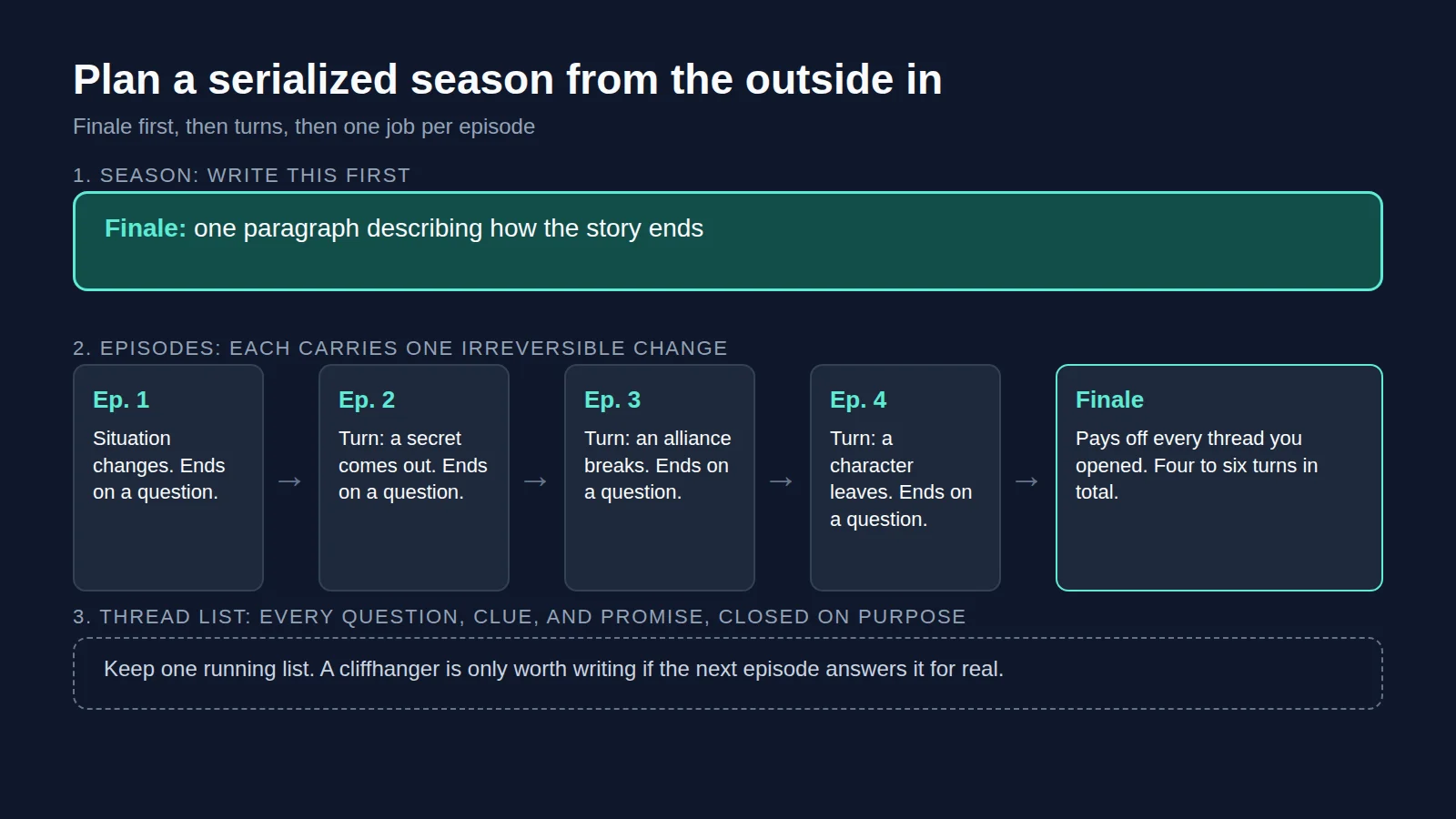
- Write the script. Plan the whole season first, then break it into episodes of one scene each. Open every episode fast and end it on a question. Put your strongest twist around the point where free episodes run out, since that is where viewers decide whether to pay.
- Cast it. Keep the principal cast small. Viewers need to recognize each face or voice at a glance.
- Film vertically. Frame for 9:16 from the start rather than cropping a horizontal shot. Favor close-ups, keep faces clear of the caption area and the app buttons at the bottom of the screen, and batch every scene at one location into the same shooting day.
- Edit for the swipe. Cut dead air, burn in captions for viewers watching with the sound off, and check that the first frame of each episode makes sense on its own.
The planning habits carry over from audio fiction. See how to plan a serialized drama for season arcs and episode-ending questions.
How do you make a micro drama with AI?
With AI production you still write the story, but the voices and visuals are generated instead of filmed. A typical AI workflow runs script, characters, visual style, generated shots, voices, captions, and a final edit.
In the AI micro drama maker on Jellypod, that looks like this:
- Write the episode. Describe the scene, or paste a script with each speaker's name in brackets above their lines.
- Cast it. Match each speaker to one of up to four saved characters. Characters keep their voices, so the same cast returns in every episode.
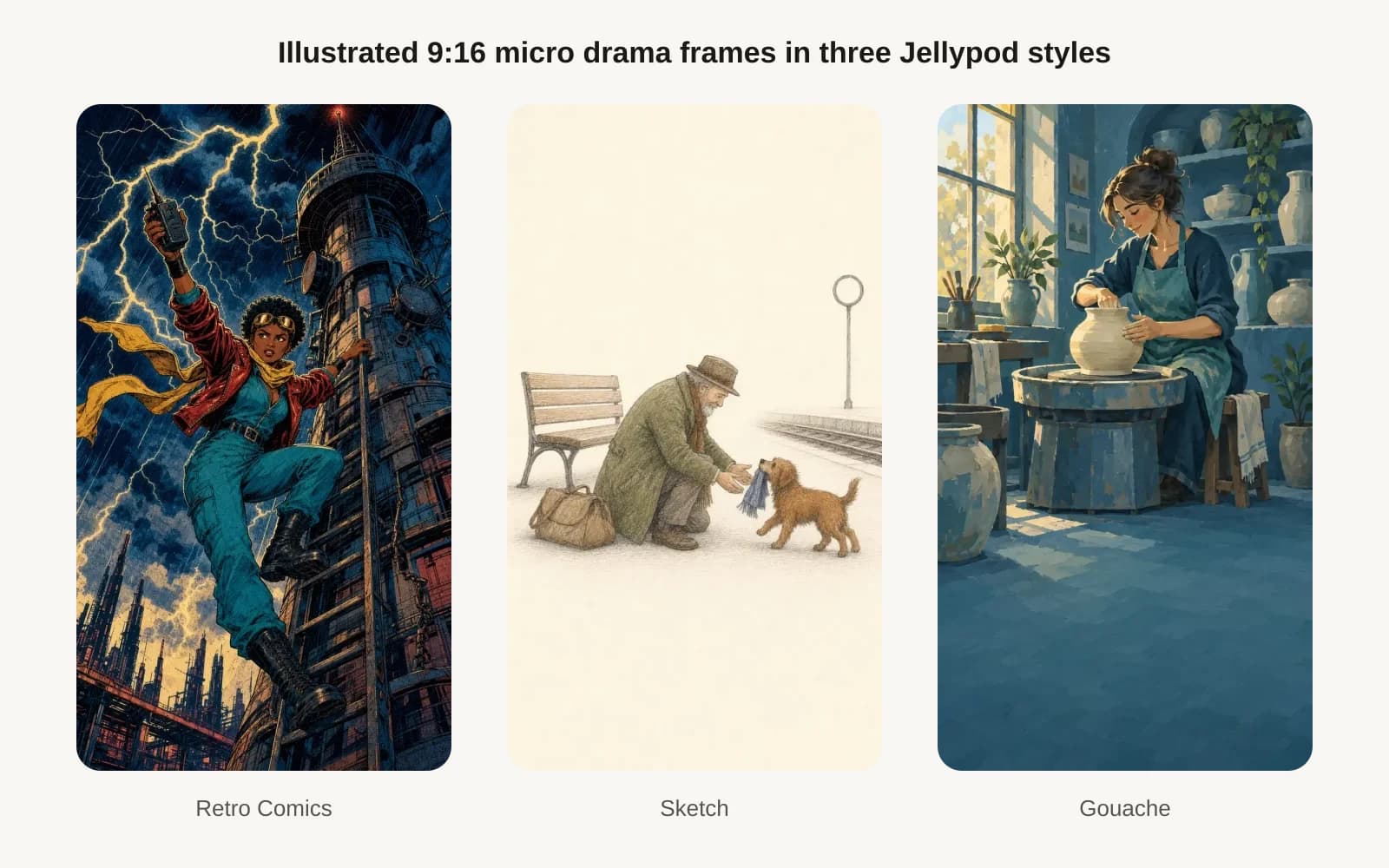
- Pick a look. Choose a visual style, from comic panels to claymation, and keep it for the whole season so the episodes read as one series.
- Generate and post. Jellypod voices the dialogue, draws every shot, and adds word-synced captions and an original score in 9:16. Edit any shot, then download the MP4 for TikTok, Reels, or YouTube Shorts.
Jellypod micro dramas are illustrated, not photoreal live action like ReelShort's. Within an episode a recurring character is drawn against a reference sheet, but each episode generates its own scenes, so a look can drift between episodes. When it does, regenerate the shot with a note or swap in your own image. Pricing is 30 credits per minute of narration, plus 7 credits per generated image and 20 per generated video clip.
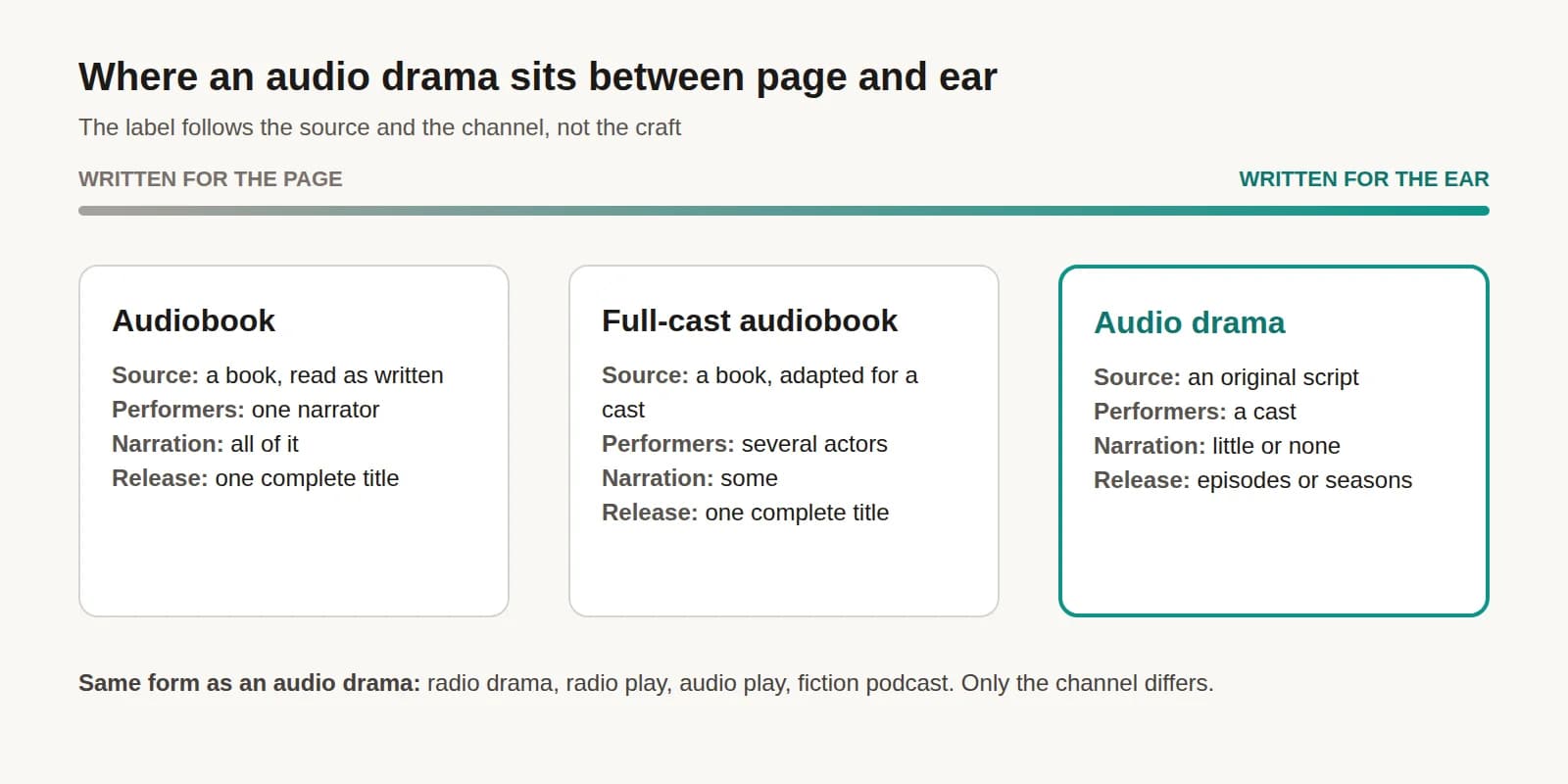
If your story works better as sound only, the same characters can star in an audio drama for podcast apps.
Frequently asked questions
Why are micro dramas so popular? They fit the way people already use their phones. An episode takes a minute, needs no setup, and ends on a cliffhanger, so it is easy to watch one more. The plots use familiar romance and revenge tropes that pay off quickly.
Are micro dramas free to watch? Partly. Apps usually give away the first eight to 10 episodes of a series, then ask viewers to unlock the rest with coins, a subscription, or by watching ads. Many creators also post free episodes on TikTok, Reels, and YouTube Shorts.
What is the biggest micro drama app? By revenue, ReelShort and DramaBox. Sensor Tower ranked them first and second worldwide in the first quarter of 2025, with about $130 million and $120 million in in-app revenue for that quarter.
Can one person make a micro drama? Yes. A solo creator can shoot a small live-action series on a phone with a few actors, or use an AI micro drama maker to write, voice, and illustrate each episode without a shoot.
The short version
A micro drama is a vertical serial told one cliffhanger at a time, and it grew from a Chinese niche into a multi-billion-dollar app category. If you have a story to tell in one-minute pieces, write your first episode in Jellypod's AI micro drama maker.