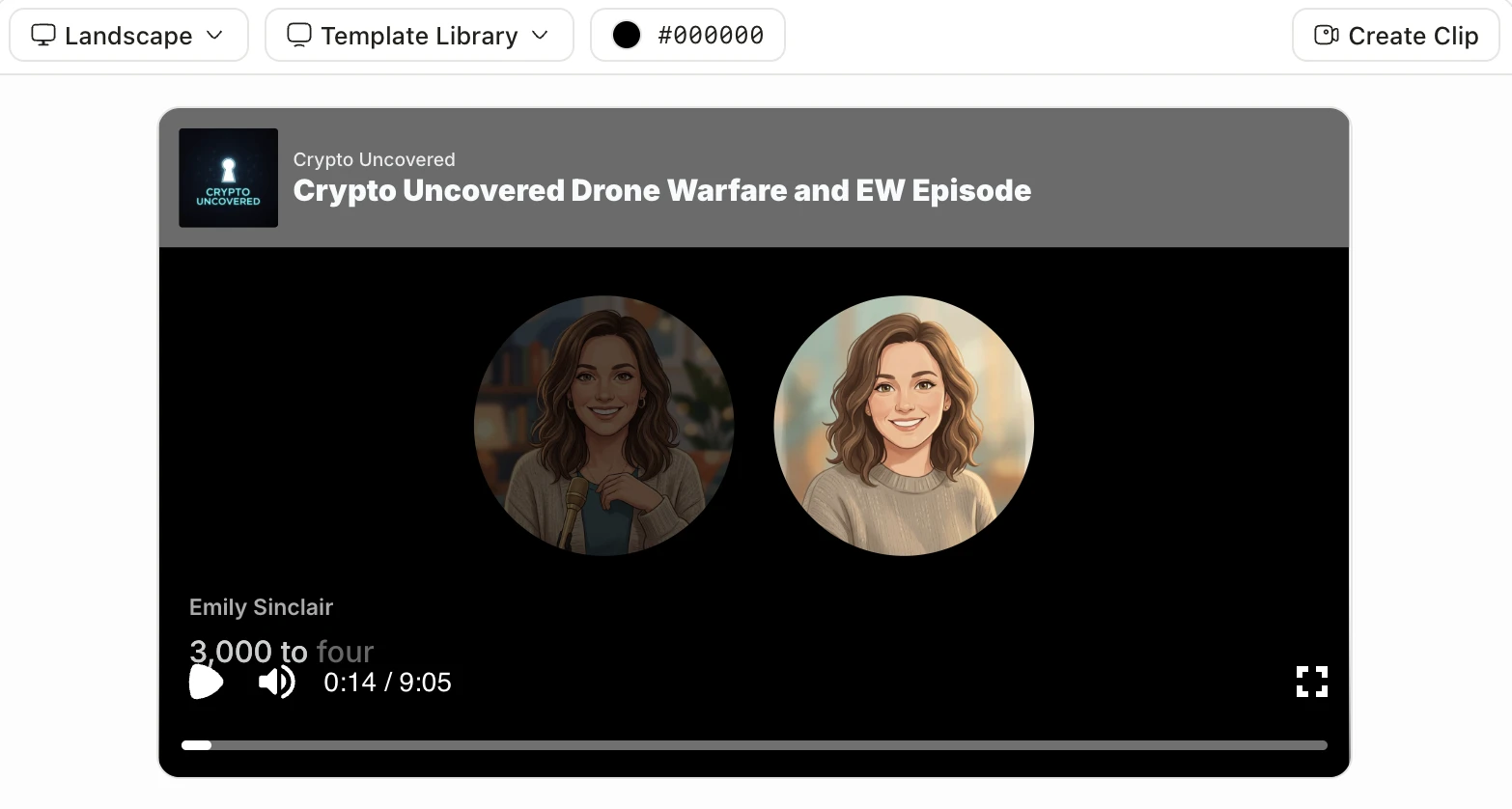
Whitepapers are built for depth. That is their strength and their weakness. They can carry a serious argument, explain technical context, and support a buying decision, but they also ask the reader for a lot of attention. Many prospects download the PDF, skim the first page, and never return.
A podcast episode gives the whitepaper another route to the same audience. The goal is to turn the argument into a conversation people actually want to finish, not read the PDF out loud.
Choose the right whitepaper
Start with a source that has a real point of view. If the source does not teach anything, the episode will not either, so skip the thin brochures.
Industry reports
Technical explainers
Research-backed guides
Buyer education
Compliance explainers
Market trend reports
Find the argument
Every good whitepaper has a core argument. It may be buried under sections, charts, and citations, but it is there, and it becomes the spine of the episode.
- What changed in the market?
- What does the reader misunderstand?
- What decision does this help them make?
- What risk does it help them avoid?
- What framework does it introduce?
Turn sections into chapters
Most whitepapers already have a chapter structure. Keep the useful parts, but simplify them for listening. This is enough for a 10 to 15 minute episode.
- Why this topic matters nowOpen with the reason a listener should care today.
- The common mistakeName what most people get wrong.
- The new way to think about itIntroduce the framework the paper offers.
- A practical exampleMake the idea concrete with one real case.
- What to do nextLeave the listener with a clear action.
Add a host, not just narration
Whitepapers are often written in formal language. Podcasts work better when the listener has a guide. A two-host format turns dense material into a guided explanation: one host sets up the question, the other explains the idea, the first asks the follow-up a listener would have, and the second ties it back to the source.
Keep the source visible
If the episode is based on a whitepaper, say so. Link the episode page back to the PDF and use the transcript to cite the original sections.
Listen for the overview, read the PDF for depth, share the transcript for a quick summary. The three formats reinforce each other instead of competing.
Episode ideas from one whitepaper
One strong whitepaper can usually become a full campaign. That is useful for B2B teams, because a single source can support several episodes.
The executive summary
The biggest misconception
The data behind it
The buyer's checklist
The implementation roadmap
The customer story
How to make it in Jellypod
Jellypod supports PDFs and other source files, so the production loop keeps the episode grounded in the source. This is a different job than a plain PDF-to-audio reader; see how to turn a PDF into a podcast for the distinction and the full step-by-step.
- Upload the whitepaperAdd the PDF and any supporting files as sources.
- Generate the scriptLet Jellypod draft an episode around the core argument.
- Edit the languageLoosen the formal tone and cut what a listener cannot follow without the page.
- Choose hosts and generate audioPick your voices, then produce the episode.
- Publish with a transcriptShip it with a transcript that links back to the PDF sections.
The quick checklist
- Who is the listener?
- What is the one promise of the episode?
- Which sections can be skipped?
- Which examples need to be explained out loud?
- Where should the transcript link back to the PDF?
- What should the listener do after the episode?
The real opportunity
Whitepapers are not dead, just too heavy to carry every job alone. Use the PDF for depth, the podcast for reach, and the public episode transcript for search. Together, they give the same expertise more ways to be found and finished.