
The teach-back method asks a patient to explain a diagnosis or care plan back in their own words, right after a clinician explains it, so a misunderstanding gets caught before the patient walks out the door. A 2020 randomized trial of 70 heart failure patients found the group that got teach-back education scored 10.03 out of a possible knowledge scale at three months, against 8.00 for the group that got standard counseling alone, and reported fewer readmissions in the teach-back arm (Rahmani et al., Cardiology Research and Practice, 2020). The technique works. The problem is that it takes a clinician's live time, once, with one patient, and that time is the first thing a busy shift cuts.
Jellypod closes that specific gap: it turns the same approved explanation, discharge summary, or care plan a clinic already writes into a short narrated audio or video episode a patient can replay on their own, as many times as they need, without booking more of a nurse's day.
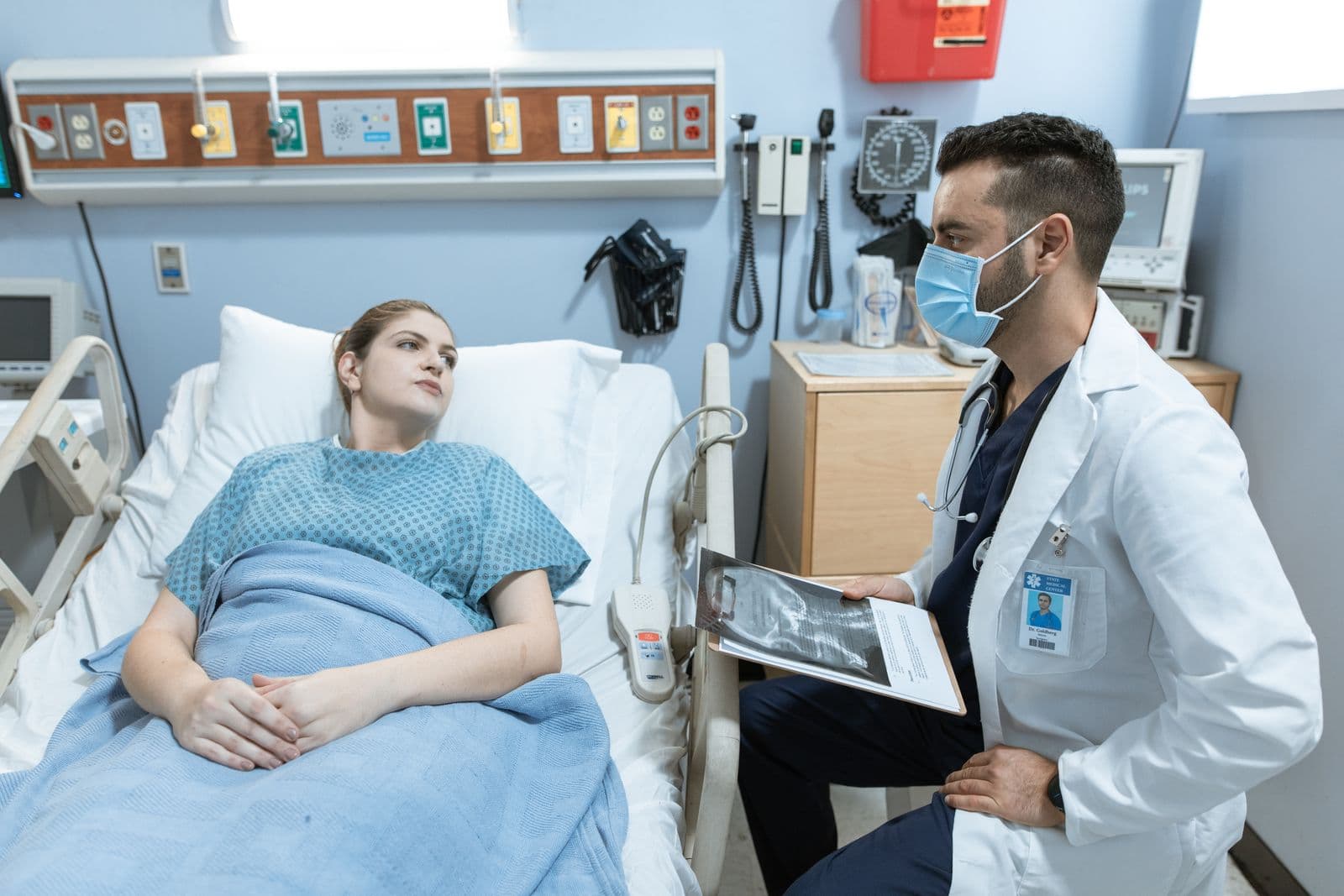
What is the teach-back method?
Teach-back is a communication check, not a quiz. A clinician explains something, a medication schedule, a wound care step, why a follow-up appointment matters, then asks the patient to repeat it back in their own words rather than asking "does that make sense?" A patient who nods along to a yes-or-no question is not proof of understanding. A patient who can explain a plan back, unprompted, usually is.
The National Quality Forum frames it as a closed-loop communication standard: explain, ask the patient to restate it, correct any gap, and repeat until the explanation comes back clean. If it does not, the clinician re-explains using different words rather than the same explanation louder, and checks again. That loop, not the initial explanation, is what teach-back actually adds.
Does the teach-back method actually improve patient outcomes?
Yes, and the newest controlled data is specific about where. In the 2020 randomized trial in Cardiology Research and Practice, 70 heart failure patients hospitalized in Tehran were split evenly between a teach-back intervention and standard discharge counseling. At three months, the teach-back group's knowledge scores rose from 5.23 to 10.03, against 4.37 to 8.00 in the control group, a significantly larger gain (p < 0.05). The same trial reported the frequency of hospital readmissions decreased in the teach-back group, alongside gains across most quality-of-life measures on the SF-36 scale, with physical function the one dimension that did not move.
A separate 2025 randomized trial pushes the same finding into a different condition: patients starting CPAP therapy for sleep apnea who got a 3-minute teach-back-style video hit a 68.2% adherence threshold at three weeks, against 50% for standard counseling, detailed in what the research says about medication adherence. Different disease, different outcome measure, same mechanism: confirming understanding in the room changes what a patient does after they leave it.
Why don't nurses use teach-back more often, if it works this well?
Time, almost every time. Nurses "frequently report time as a barrier to thorough patient education," and interruptions, short staffing, and a lack of standardized training compound it, according to a review published in American Nurse Journal. Teach-back is not slow because the technique is complicated. It is slow because doing it properly means a clinician stays in the room until an explanation comes back clean, on a unit where the next patient is already waiting.
The cost of skipping it is not small. Low health literacy, the gap teach-back exists to close, added an estimated $73 billion to US health care spending in 1998 dollars, with a 2003 estimate ranging from $106 billion to $238 billion a year, driven mostly by longer hospital stays among patients who did not understand their own care plan. The same barrier shows up on the training side: a 2019 evidence-based practice project at the University of Hartford found nurses' self-reported likelihood of using teach-back in their own practice rose by 33% after watching a single 5-minute video demonstration (Denault et al., American Nurse Journal, 2019). A short video moved adoption more than a policy memo would have.
How do you scale teach-back beyond one conversation?
You cannot add more hours to a nurse's shift, but you can move part of the explanation outside the room entirely, so the live conversation only has to confirm understanding rather than build it from zero.
- Upload the discharge instructions, care plan, or medication guide you already useJellypod drafts a script grounded in the actual document a clinician wrote and approved, not a generic explanation of the diagnosis.
- Review the script against the source before producing anythingNames, doses, and any measurement need to match the source document exactly. Medical content does not get an approximate pass.
- Produce it as a short audio or video episode, in the clinician's own voiceVoice cloning lets the same voice a patient heard at bedside carry the explanation into the version they replay at home.
- Hand the patient something to replay before the next teach-back checkA patient who reviews the explanation once more before a follow-up call or a repeat visit walks into that next conversation with less to relearn, so the live teach-back loop closes faster.
Teach-back's value is in the closed loop: a clinician hearing a patient explain a plan back and correcting a specific gap. A replayable episode is what a patient reviews between those checks, not a substitute for the conversation itself.
This is the same production path as turning a patient handout into audio: the source document does not change, only the format the patient gets to revisit. For clinical educators training staff on the technique itself rather than patients on a care plan, the same approach applies to CME-style content clinicians can actually finish.

A real example: reinforcing understanding after the appointment ends
Steve DeNunzio, an MBA professor at The Ohio State University, described the same principle from a classroom angle: "It's not about replacing lectures. It's about reinforcing the arc of learning in the moments students actually have." Teach-back works on an identical premise in a clinical setting. A single explanation, however well delivered, is one moment. What a patient can return to on their own, a day or a week later when the question they did not think to ask in the room finally occurs to them, is what makes the first explanation stick.
Frequently asked questions
What is an example of the teach-back method?
A nurse explains how to use an inhaler, then asks, "Can you show me how you'd use this at home and tell me when you'd take it?" instead of "Do you understand?" If the patient's answer misses a step, the nurse re-explains that step using different words and asks again, repeating the loop until the explanation comes back correct.
Is teach-back the same as asking a patient if they have questions?
No. Asking "any questions?" puts the burden on the patient to notice their own confusion, which research on health literacy shows most patients cannot reliably do in the moment. Teach-back reverses that: the clinician actively confirms understanding by having the patient restate the plan, catching gaps a patient would not have known to flag.
How long does teach-back add to a patient visit?
Studies do not report a fixed number, but nurses consistently cite time as the leading barrier to using it. The added minutes come from the loop itself: re-explaining and re-checking until an explanation comes back clean takes longer than a single pass, which is exactly why moving part of the explanation to a replayable format outside the visit reduces what the live check has to cover.
Does teach-back work for written materials too, or only spoken explanations?
The research is strongest for spoken and video-based explanation. A 2019 meta-analysis of 51 studies found written discharge instructions were recalled correctly 58% of the time against 67% for video, covered in what the research says about patient education handouts. Teach-back as a live technique works regardless of format, but the material a patient reviews beforehand or afterward performs better as audio or video than as a printed page.
Who should use the teach-back method?
Any clinician delivering information a patient needs to act on correctly: a nurse explaining discharge instructions, a pharmacist reviewing a new prescription, a physician describing a diagnosis. It matters most where the cost of a misunderstanding is highest, chronic disease management, post-surgical care, and any instruction tied to medication adherence.
The short version
Teach-back works. A 2020 randomized trial found it raised patient knowledge scores and reduced readmissions, and it is one of the few patient communication techniques with controlled trial data behind it at all. What breaks it is not the method, it is the clock: nurses cite time as the reason they skip it, and skipping it is expensive at a system level. Moving the explanation itself into a replayable audio or video episode, grounded in the same document a clinician already approved, does not replace the live check. It gives the next one less ground to cover. See how Jellypod fits into health and medical content.