Audio to Video: Turn Any Audio File into a Video
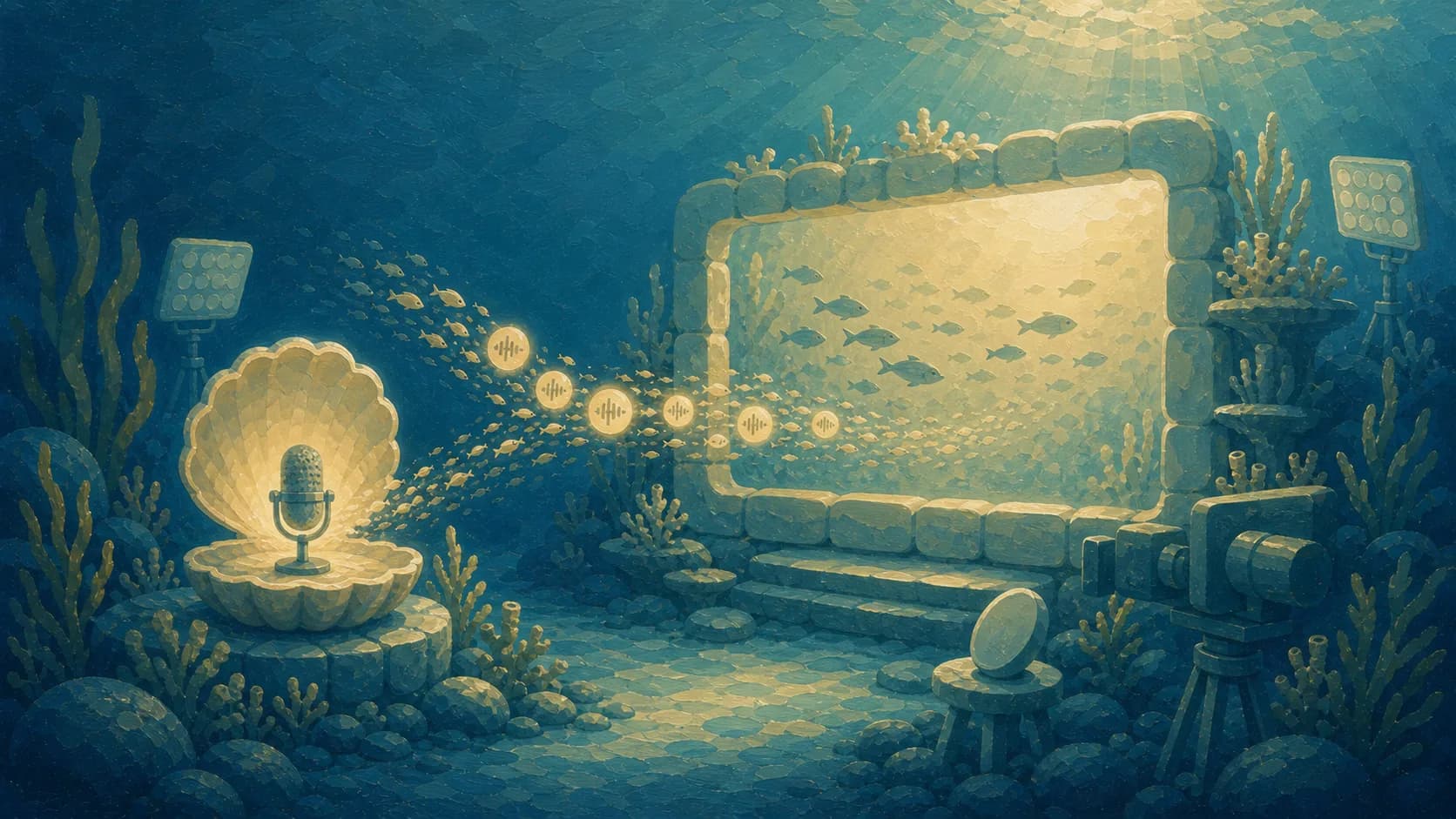
Upload an audio file and Jellypod renders it as a finished video. Pick one of 16 visual styles and it generates every scene from what the audio is saying, timed to the narration, with word-synced captions.
See Magic Video? Magic Video
To turn audio into video, upload your audio file to Jellypod and pick one of 16 visual styles. Jellypod reads the narration, generates a sequence of illustrated scenes timed to it, and renders a 1080p MP4 with word-synced captions. Videos run up to 25 minutes.
Last updated: August 2026
Trusted by teams at












- 60K
- Global Creators
Source: Jellypod platform data, May 2026
- 100K+
- Generated Podcasts
Source: Jellypod platform data, May 2026
- 74
- Supported Languages
Source: Jellypod product spec, May 2026
- 7 min
- Avg. Time to First Episode
Source: Jellypod onboarding analytics, May 2026
Quality
Listen to an AI-Generated Podcast
Don't just take our word for it, hear an episode yourself. These podcasts were generated entirely using Jellypod, with ultra-realistic voices and natural conversation flow.

100+ Voice Options
Preview Our AI Voices
Choose from 100+ ultrarealistic voices in 70+ languages. Clone your voice or design a custom one with a text prompt.
View full voice libraryWhat is Audio to Video?
Audio to video means taking an audio file you already have, a recording, a narration track, a podcast episode, and turning it into a video you can upload to YouTube or post to a feed. Converting the file is trivial. Filling the frame is the problem: audio alone gives a video player nothing to show, and platforms that reward watch time punish a static image.
The usual workaround is an audiogram: your cover art, a bouncing waveform, and captions. It fills the frame but it does not hold attention, because nothing on screen relates to what is being said. Jellypod takes a different approach. It reads what your narration is actually saying and generates illustrated scenes for it, in one of 16 art styles, timed to the words. The visuals track the content, so a viewer watching on mute still follows the argument.
You pick a style and nothing else. There are no models to compare, no node graphs to wire up, and no prompts to tune. Behind the scenes an agent drafts the shot list, generates each image, animates it, checks the result against the style before accepting it, and regenerates anything that falls short. Recurring characters carry a reference sheet so the same character still looks like the same character twenty minutes in. When something is not right, regenerate that one scene or adjust it on the timeline rather than re-rendering everything.
Videos render at 1080p with word-synced captions, up to 25 minutes: 10 minutes on Starter and Educator, 15 on Creator, and 25 on Business. Audio to video is one path into the wider Jellypod AI Podcast Studio, which also turns YouTube videos into podcasts and slide decks into narrated episodes.
Three simple steps
Upload your audio
Upload an audio file, or start from an episode you already made in Jellypod. Recordings, narration, and interviews all work.
Pick a style
Choose one of 16 visual styles. Jellypod reads the narration and generates a sequence of scenes timed to it. There are no models to pick and no prompts to write.
Download the MP4
Render in 1080p with word-synced captions, then upload it to YouTube or anywhere else your audience watches.
Everything you need
16 visual styles
16 distinct art styles, from Claymation and Toy Bricks to Watercolor and Whiteboard Explainer. Pick one and the whole video holds that look from the first frame to the last.
Scenes generated from your audio
Jellypod reads what your narration is saying and draws scenes for it, rather than pulling stock clips that vaguely match a keyword.
Consistent characters
Recurring characters get a reference sheet, so the same character still looks like the same character twenty minutes in.
Automatic quality checks
Every generated frame is checked against the style before it ships, and anything that fails gets regenerated. You see the result, not the retries.
Word-synced captions
Captions are synced word by word, which is what keeps viewers watching on mute in a feed.
Edit without starting over
Regenerate any single scene you do not like, or adjust the video on a timeline. Changing one image does not mean re-rendering the whole video.
Built for real workflows
Podcasters moving to YouTube
Put your podcast on YouTube as something people will actually watch, instead of a static cover image with a waveform bouncing over it.
Educators & recorded lectures
Turn recorded lectures into illustrated video students will finish, with visuals that follow the explanation rather than a slide that never changes.
Faceless YouTube channels
Run a faceless channel without filming anything. Record the narration, pick a style, and publish. Nobody appears on camera.
Audio → Video FAQs
Your questions answered.
Ready to create your podcast?
Go from idea to published episode in minutes. No recording, editing, or experience required.